Showing posts with label dissolved oxygen. Show all posts

Wednesday, June 26, 2013

Week 3 Day 2

Crazy busy day today, although it didn't feel very productive. The sensor clusters are all assembled, which is great news, but once they were put together it was time to start testing them.


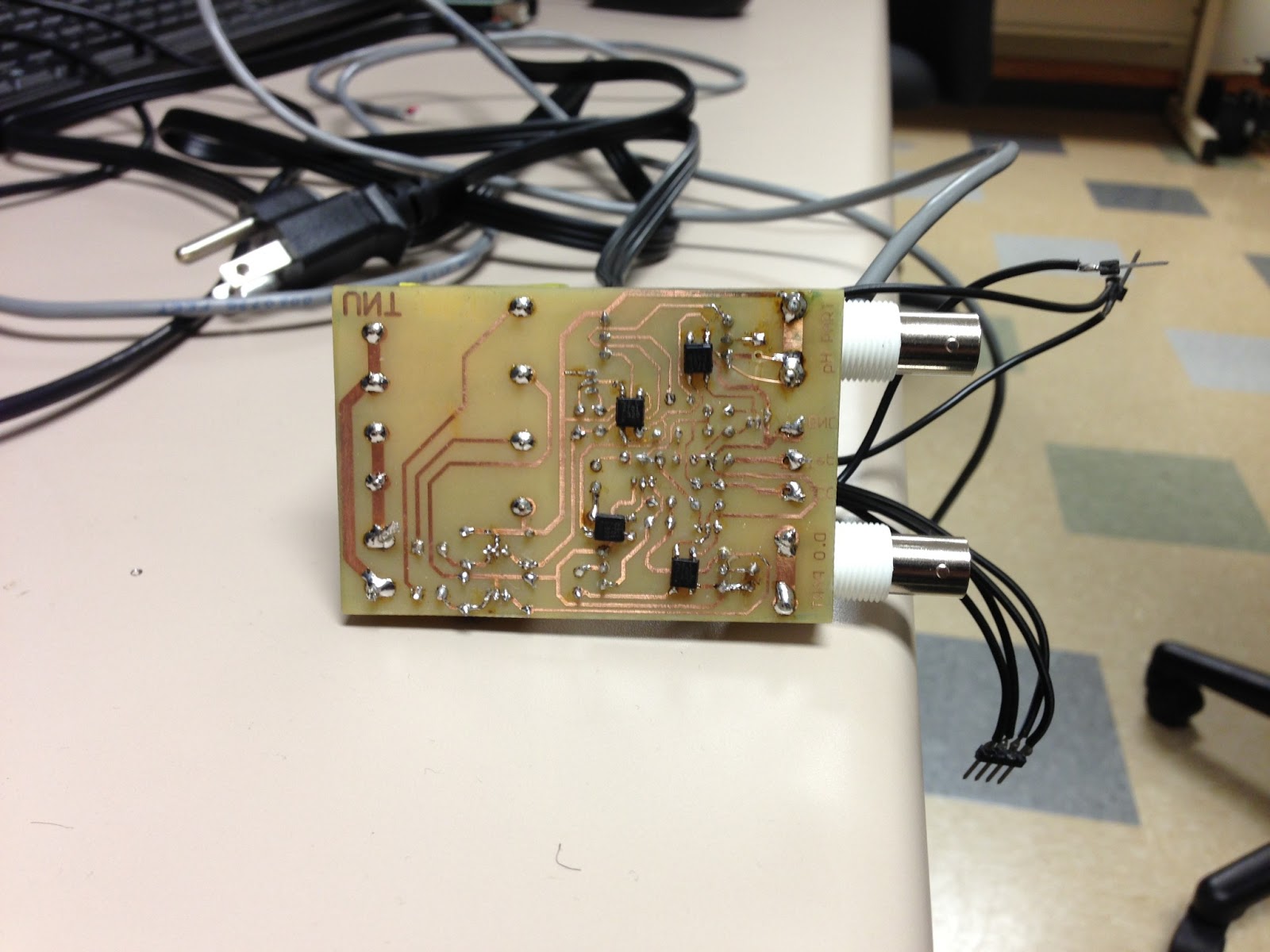
They look pretty good and fit very well into the smaller Otter Boxes so that is a success. You can see two generations of our sensor cluster lined up n the pics below. Things started to go a little bit wrong after this point, though.


So far we have a total of five sensor clusters completed and moved on to testing. And that is where we are having trouble. We spent the remainder of the morning getting our clusters, numbered 11-15, to connect to the coordinator and start transmitting data. We were at a complete loss until we discovered that the outlet the sensor was plugged in to seemed to matter. At first we thought it was a distance issue, but that seemed wrong since we were well with in the range of our radio. Mike ran down the hall plugging in clusters and the started working out there. I really don't know why it makes a difference because it wasn't as clear cut as wall outlets vs. surge protectors or something. One wall in the lab powered up the unit but wouldn't transmit. One power strip wouldn't. The hall outlets all seemed to be fine. Anyone who has some insight on this, please feel free to comment. 

Once we had everything transmitting properly we started trying to calibrate the sensors to make sure everything was set up. Temperature was a bit of an issue and we didn't have any good probeware to use for comparison. We will try that tomorrow.


The last hour before we left was spent reviewing all the work we have done and working on ideas for how to present our work this Friday during the midterm presentation. I think we are off to a really good start and  have done a lot of quality work... AND we know how to explain it!


So, overall, good stuff happened today. There is plenty of work left to do, however. 

"But, wait! What's this?" you might ask...


That is phase two, my friends. Details to come...


Friday, June 21, 2013

Week 2 Day 4

Crazy busy day! Spoiler Alert: We got our base sensor clusters done! Ok, so back to the start. We spent most of Wednesday disassembling our test clusters. Today we were focused on getting everything properly attached to our printed circuit boards (PCB) which took some doing.


 Think of it as playing a game that is half putting together a complicated puzzle with tiny pieces and half Operation but with out the convenient buzzer to let you know you screwed something up.We managed to get everything tacked down on the boards in the morning... and then spent the rest of the afternoon trouble shooting why they things weren't working. I will spare you the details because it was something different in each case but it tended to revolve around either messing up the polarity of a component or shorting a connection with solder that bled over with out you noticing. After we cleaned that up we managed to get both stamps on each board to light up.


This was a major success but we weren't done yet. We plugged them all in and ran down the hall to the other lab to check our receiver unit. Sure enough, there were our data strings separated by sensor number just like we hoped! It was a good day.

We aren't done yet, though. What we have done so far is make a set of four sensor clusters that are identical in function to what we designed last year and networked them together. That is great, but not the final goal. Next we are going to work on creating a control system to manipulate water level based on feedback from an ultrasonic sensor and/or alarms based on temperature, pH and DO readings. The basic idea is that if water level is too low add water. If water level is too high bleed of water. If pH, DO or temperature alarms go off then you would flush part of the tank by bleeding off and adding water at the same time. We will keep you posted on how that works out.

Wednesday, June 19, 2013

Week 2 Day 3

This morning was a lot of effort for very little gain. We spent the first chunk of the day testing what we built yesterday and making sure the calibration was still good. Then we tested the probes all in one bowl of water. Unsurprisingly, it didn't work. All of the sensors use voltage to take their readings and, even when you aren't actually reading, the voltage stays on. So... when you have a probe that depends on a voltage reading next to a separate voltage source the inevitable happens. Bad readings.


We spent the next couple of hours dissassembling what we built yesterday so that we could reuse the circuit stamps for the pH and DO and stripping the thermistor off the old circuit so we could use it as well. No money for more probes and no time to wait for them!


Once we had everything we needed of the old boards we started laying out the new circuits, complete with the hardware switching to make sure we aren't dumping extra voltage into the water.


We took a break and went down to the library to do some more research for our paper and discussed what it was we were really going to write about. It is difficult to explain that you are building a model of a model of a stream. Model inception! So, what are some real world applications? Aside from actual stream monitoring, what about monitoring fish farms!


Eventually we rolled back up to the lab and started soldering up a storm to get more done. We aren't finished yet but we are on track to have all of our sensor clusters operational by the lunch break tomorrow!


Week2 Day 2

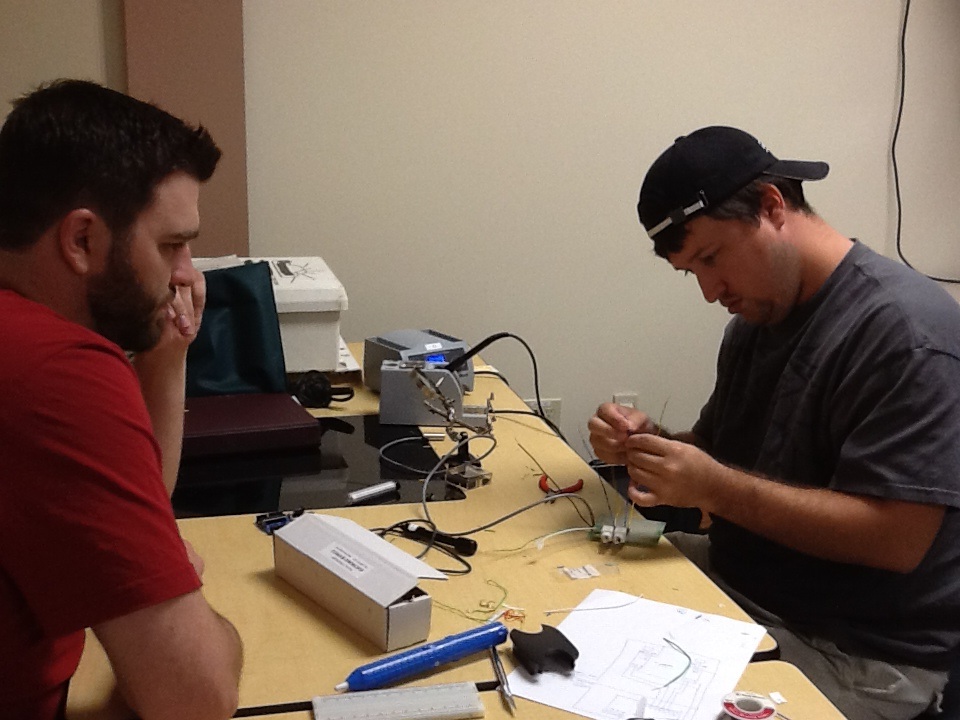
This was a down and dirty build day in the morning. I started out teaching Deliah some soldering skills while Yixing worked with Mike. It took a couple of hours but we ended up with three complete circuits for our sensor clusters. They are not the power regulated circuits but they do all function and transmit so that is a success.


In the afternoon we met over at EESAT and discussed when Tech Fest would be (Dec. 7th) and what each group would be presenting. We were caught a little off guard because we had not even started to talk about that yet. After that meeting we spent the rest of the afternoon brainstorming ideas for our Tech Fest activity.

Monday, June 17, 2013

Week 2 Day 1

We are back and refreshed from the weekend. We have a lot to get done this week and we are off to a great start. Last week we managed to build and test sensor setups for the temperature and pH. This morning we completed the cycle by putting together a DO sensor.


I got lucky and mine worked on the first go. Took a bit to get the thing calibrated but nothing major. The rest of the team spent a little more time working with theirs to get them functioning properly. They did manage to get there but the road was dark and winding. 


While Deliah and Mike were working the kinks out of their DO sensors I was next door slapping together a basic sensor cluster.


 It doesn't look very pretty but I was not especially worried about aesthetics since I already know this one isn't going to work right. "But wait!", you say, "Why, Zac, would you build something you know doesn't work?" Great question. I'm not going to tell you. Yet. It will be an opportunity for discovery learning for the team to figure out why just adding all of our circuit designs on to one board will not work. Those of you playing at home... you could cheat and look back to last years blog. The link is on the home page. That seems unsatisfying, though. I recommend you try and figure it out from looking at the pictures below. I promise to give you the answer later.


The afternoon we spent listening to a seminar on wireless sensor networks from Dr. Fu. That seemed pretty topical considering our project. It was mostly theory, though. Dr. Acevedo followed up Dr. Fu's presentation with an application of a wireless sensor cluster that is actually in use monitoring weather and UV exposure in the area around Denton County.