Friday, June 21, 2013

Week 2 Day 4

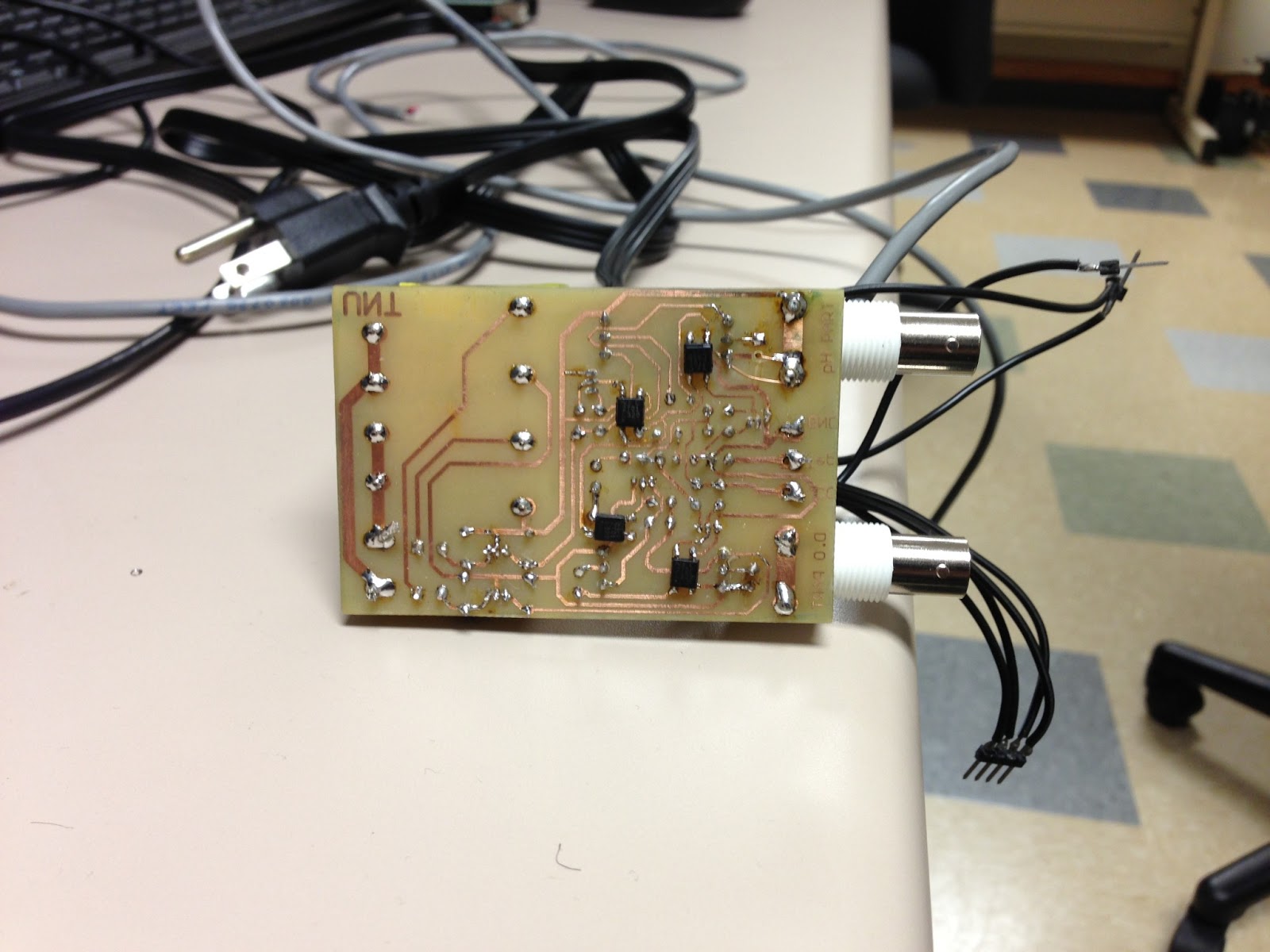
Crazy busy day! Spoiler Alert: We got our base sensor clusters done! Ok, so back to the start. We spent most of Wednesday disassembling our test clusters. Today we were focused on getting everything properly attached to our printed circuit boards (PCB) which took some doing.


 Think of it as playing a game that is half putting together a complicated puzzle with tiny pieces and half Operation but with out the convenient buzzer to let you know you screwed something up.We managed to get everything tacked down on the boards in the morning... and then spent the rest of the afternoon trouble shooting why they things weren't working. I will spare you the details because it was something different in each case but it tended to revolve around either messing up the polarity of a component or shorting a connection with solder that bled over with out you noticing. After we cleaned that up we managed to get both stamps on each board to light up.


This was a major success but we weren't done yet. We plugged them all in and ran down the hall to the other lab to check our receiver unit. Sure enough, there were our data strings separated by sensor number just like we hoped! It was a good day.
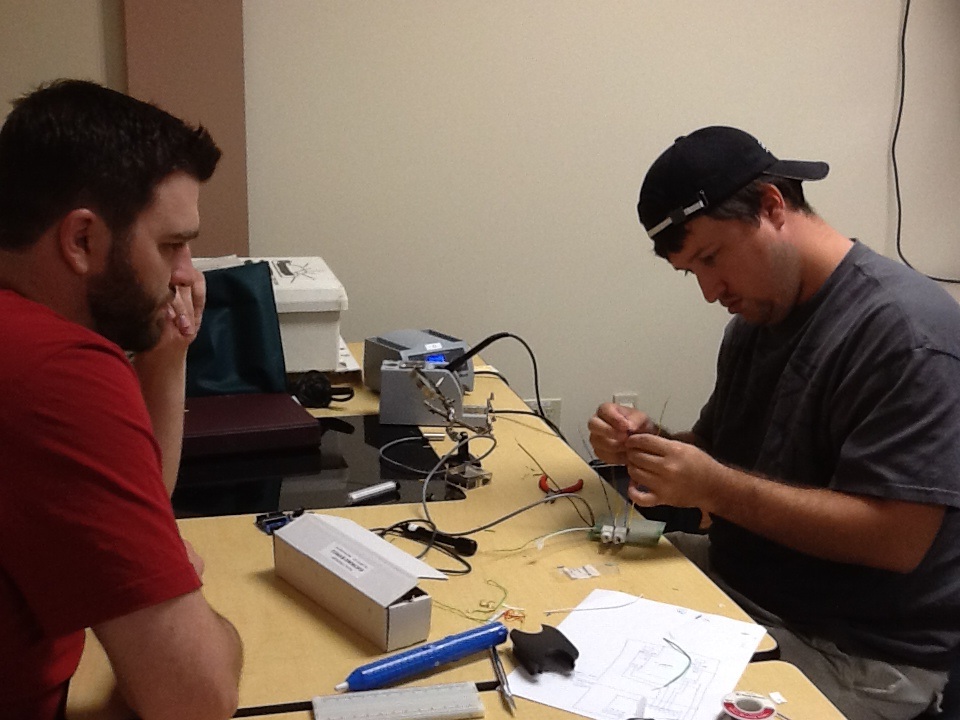
We aren't done yet, though. What we have done so far is make a set of four sensor clusters that are identical in function to what we designed last year and networked them together. That is great, but not the final goal. Next we are going to work on creating a control system to manipulate water level based on feedback from an ultrasonic sensor and/or alarms based on temperature, pH and DO readings. The basic idea is that if water level is too low add water. If water level is too high bleed of water. If pH, DO or temperature alarms go off then you would flush part of the tank by bleeding off and adding water at the same time. We will keep you posted on how that works out.

Wednesday, June 19, 2013

Week 2 Day 3

This morning was a lot of effort for very little gain. We spent the first chunk of the day testing what we built yesterday and making sure the calibration was still good. Then we tested the probes all in one bowl of water. Unsurprisingly, it didn't work. All of the sensors use voltage to take their readings and, even when you aren't actually reading, the voltage stays on. So... when you have a probe that depends on a voltage reading next to a separate voltage source the inevitable happens. Bad readings.


We spent the next couple of hours dissassembling what we built yesterday so that we could reuse the circuit stamps for the pH and DO and stripping the thermistor off the old circuit so we could use it as well. No money for more probes and no time to wait for them!


Once we had everything we needed of the old boards we started laying out the new circuits, complete with the hardware switching to make sure we aren't dumping extra voltage into the water.


We took a break and went down to the library to do some more research for our paper and discussed what it was we were really going to write about. It is difficult to explain that you are building a model of a model of a stream. Model inception! So, what are some real world applications? Aside from actual stream monitoring, what about monitoring fish farms!


Eventually we rolled back up to the lab and started soldering up a storm to get more done. We aren't finished yet but we are on track to have all of our sensor clusters operational by the lunch break tomorrow!


Week2 Day 2

This was a down and dirty build day in the morning. I started out teaching Deliah some soldering skills while Yixing worked with Mike. It took a couple of hours but we ended up with three complete circuits for our sensor clusters. They are not the power regulated circuits but they do all function and transmit so that is a success.


In the afternoon we met over at EESAT and discussed when Tech Fest would be (Dec. 7th) and what each group would be presenting. We were caught a little off guard because we had not even started to talk about that yet. After that meeting we spent the rest of the afternoon brainstorming ideas for our Tech Fest activity.

Monday, June 17, 2013

Week 2 Day 1

We are back and refreshed from the weekend. We have a lot to get done this week and we are off to a great start. Last week we managed to build and test sensor setups for the temperature and pH. This morning we completed the cycle by putting together a DO sensor.


I got lucky and mine worked on the first go. Took a bit to get the thing calibrated but nothing major. The rest of the team spent a little more time working with theirs to get them functioning properly. They did manage to get there but the road was dark and winding. 


While Deliah and Mike were working the kinks out of their DO sensors I was next door slapping together a basic sensor cluster.


 It doesn't look very pretty but I was not especially worried about aesthetics since I already know this one isn't going to work right. "But wait!", you say, "Why, Zac, would you build something you know doesn't work?" Great question. I'm not going to tell you. Yet. It will be an opportunity for discovery learning for the team to figure out why just adding all of our circuit designs on to one board will not work. Those of you playing at home... you could cheat and look back to last years blog. The link is on the home page. That seems unsatisfying, though. I recommend you try and figure it out from looking at the pictures below. I promise to give you the answer later.


The afternoon we spent listening to a seminar on wireless sensor networks from Dr. Fu. That seemed pretty topical considering our project. It was mostly theory, though. Dr. Acevedo followed up Dr. Fu's presentation with an application of a wireless sensor cluster that is actually in use monitoring weather and UV exposure in the area around Denton County.


Friday, June 14, 2013

Week 1 Day 5

And so the first week of our adventure comes to a close. Today revolved mostly around research and planning. It started out in the morning with Dr. Thompson going over the 'why' of the RET program to make sure we are all on the same page with what we are meant to be doing. It was a call to action and a reminder that we are here to improve our craft and to return to our classrooms energized and excited so that we can help our students engage. After that conversation we moved on to discussing the format our lesson plans will need to follow this year and what a good lesson plan should look like based on the needs of this program as well as our needs for the classroom. It was a good reminder and clarified some of the concerns we had last year. After that seminar was concluded the team met with Dr. Thompson and discussed different directions our paper could take. It got animated and we have some good ideas for a new direction with our paper. Spoiler alert... Just kidding. I'm not going to tell you.


 Then, the most anticipated part of the morning.... lunch.

After lunch we met down in the library for a quick session on how to research, site things, etc. After that the team had some dialogue on exactly what our goal was and how we wanted to attack the paper. It sounds like we have come to a solid consensus and I think you will be pleasantly surprised.


Thursday, June 13, 2013

Week 1 Day 4

Day four let us get back to work on our actually program. We started with some foundation skills, working with individual pieces of the sensor cluster, and explored how each one works. We started out with the simplest sensor, the thermistor, and coded the Arduino to take continuous readings with that.


Once we had the thermistor running we switched gears and started messing with the XBee. The XBee is the radio we are using for our wireless system. We started out just setting up a simple text transmission program to get some practice with how it works. we had some issues with addressing in X-CTU, but nothing major. This portion of the process was relatively painless.


The fun didn't stop there, though. Step two was combining our first two projects so that we could take the temperature at one location and transmit it for display across the room. This took a good bit more effort but it was pretty rewarding to see the correct numbers start to pop up on the serial monitor.


After we got the kinks worked out of that setup we switched over to getting the pH sensor set up and calibrated. I went next door to knock out some quick soldering while Deliah and Mike messed with the code. After our experience with the thermistor, it was a pretty straight forward process to transmit the pH readings.


Tomorrow I will have the pleasure of explaining to the team why all the stuff we have done so far won't actually work as a cluster with our some heavy modification. That should be fun... ;)

Also, some friends from last year are back! They aren't as cute and fluffy as they were then. They are in their rebellious teenage years, I think, and are trying to talk unwary students into letting them in the emergency exit.